
The PhilHealth Supreme Court ruling issued in December 2025 has been interpreted in very different ways.
Some cite it as proof that the transfer of PhilHealth funds to the National Treasury was unconstitutional. Others point to the separate opinions of several justices as evidence that the officials who implemented the transfer should not face criminal liability.
Both versions leave out important parts of the decision.
The Supreme Court struck down the mechanism used to transfer the funds and ordered the money returned. But the main decision did not determine whether any individual official committed a crime.
So what did the Court actually decide?
What the PhilHealth Supreme Court ruling decided
On December 3, 2025, the Supreme Court En Banc acted on consolidated petitions challenging the transfer of PhilHealth funds to the National Treasury. The Court announced its ruling on December 5.
The justices unanimously ordered the return of the ₱60 billion that PhilHealth had already remitted to the National Treasury.
They also permanently stopped the transfer of the remaining ₱29.9 billion. A Temporary Restraining Order issued in October 2024 had already frozen that amount.
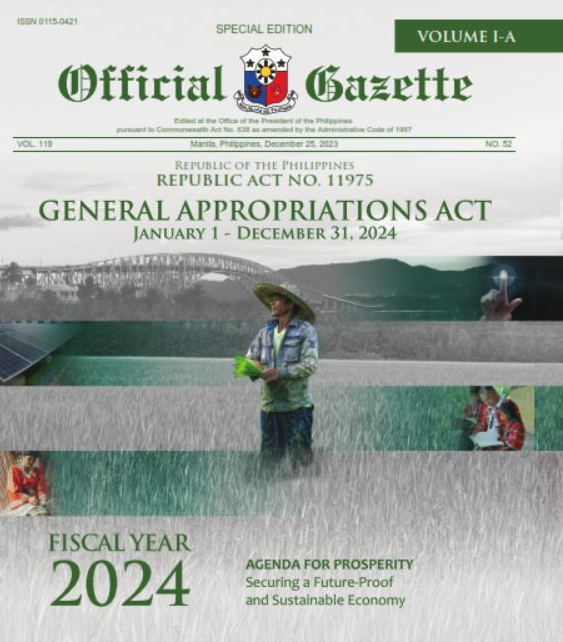
By majority vote, the Court also declared Special Provision 1(d) of the 2024 General Appropriations Act and Department of Finance Circular No. 003-2024 void.
The Court found that the provision and circular had been issued and implemented with “grave abuse of discretion amounting to lack or excess of jurisdiction.”
That finding went beyond a simple disagreement about where Congress placed the provision in the national budget.
Why the ruling went beyond a budget rider
One common summary of the decision says the Supreme Court only struck down Special Provision 1(d) because it was an improper budget “rider.”
That was part of the ruling, but not all of it.
The Court found that the provision was not sufficiently germane to the purpose of the General Appropriations Act. It also noted that the law used the term “fund balance” without clearly defining it.
But the Court also identified substantive legal conflicts.
It ruled that Special Provision 1(d) effectively interfered with Section 11 of Republic Act No. 11223, or the Universal Health Care Act.
Section 11 sets rules for PhilHealth reserves. The law requires PhilHealth to maintain reserves up to a ceiling equivalent to two years of projected program expenses.
If the reserve exceeds that ceiling, the excess must support specific health insurance purposes. These include increasing benefits under the National Health Insurance Program and reducing member contributions.
The law also states that PhilHealth reserve funds and their income cannot be transferred to the National Government or any of its agencies.
That provision became central to the case.
What the Supreme Court said about PhilHealth reserves
The government had treated part of PhilHealth’s money as excess or unused funds that could be returned to the National Treasury.
The Supreme Court rejected that interpretation as applied to PhilHealth.
The Court found that even reserve funds beyond the statutory ceiling already had uses prescribed by the Universal Health Care Act.
In other words, the law did not treat the excess as money with no purpose.
It directed PhilHealth to use those funds for expanded benefits, lower contributions, and other requirements of the National Health Insurance Program.
The Court therefore concluded that transferring the money to the National Treasury conflicted with the existing rules governing PhilHealth reserves.
The Sin Tax laws also mattered
The Court identified another legal problem.
Existing Sin Tax laws earmark portions of excise taxes on tobacco, alcohol, and sweetened beverages specifically for Universal Health Care.
According to the Court, Congress could not use the annual appropriations law to override those statutory commitments.
If lawmakers wanted to change how those funds could be used, they needed to amend the underlying laws through separate legislation.
The PhilHealth Supreme Court ruling therefore rested on more than a technical defect in the budget process. It also addressed how existing laws protect and allocate health insurance funds.
The Court connected the issue to the right to health
The decision also placed PhilHealth funds within a broader constitutional context.
The Court described them as pooled resources for social health insurance. It warned that moving those resources away from their legally assigned purpose could weaken the government’s ability to provide accessible and sustainable healthcare.
The Court linked that concern to the constitutional right to health, particularly the State’s responsibility to make healthcare available to Filipinos who need it most.
That makes the ruling more substantial than a finding that Congress simply placed a provision in the wrong part of the budget.
Not every justice agreed on how broad the ruling should be
The outcome involving the PhilHealth funds was unanimous.
The ₱60 billion had to be returned, and the government could not transfer the remaining ₱29.9 billion.
But the justices did not agree on every part of the Court’s reasoning.
Associate Justice Jhosep Lopez disagreed with striking down Special Provision 1(d) and DOF Circular No. 003-2024 in their entirety. He argued that the ruling should focus specifically on their application to PhilHealth.
Associate Justice Japar Dimaampao also opposed wholesale invalidation. Associate Justice Jose Midas Marquez similarly argued for a narrower approach.
Other justices offered different views about the national budget, unprogrammed appropriations, and the President’s certification of urgency.
So while the Court unanimously agreed on what should happen to the PhilHealth money, the broader invalidation of the provision and circular came through a majority vote.
That distinction matters.
What the Court upheld
The decision did not invalidate every government action connected with the 2024 national budget.
The Supreme Court upheld the President’s certification of the 2024 GAA as urgent.
The majority found no grave abuse of discretion in that specific action.
So the ruling targeted the fund-transfer mechanism. It was not a wholesale rejection of the entire process used to enact the 2024 budget.
What the ruling did not decide: criminal liability
This is one of the most important distinctions in the case.
The PhilHealth Supreme Court ruling did not determine whether individual officials committed plunder, technical malversation, graft, or another criminal offense.
The consolidated petitions before the Court dealt with constitutional and administrative questions. They challenged the validity of the government measures and asked whether officials acted with grave abuse of discretion.
They were not criminal prosecutions.
The main decision therefore did not issue a criminal judgment against then-Finance Secretary Ralph Recto or other officials involved in implementing the transfer.
That does not mean individual responsibility was never discussed.
Several justices addressed it in their separate opinions.
What the separate opinions actually said
Several justices emphasized that declaring the transfer mechanism unconstitutional did not automatically establish criminal liability.
Associate Justice Samuel Gaerlan argued that invalidating the issuances did not erase the Finance Secretary’s good faith or automatically create a basis for personal liability.
Associate Justice Ricardo Rosario made a similar distinction. He stressed that a finding of grave abuse of discretion does not, by itself, amount to a finding of criminal liability.
Other separate opinions also emphasized that officials implemented a statutory provision that carried a presumption of validity at the time.
These opinions are legally important.
But they should not be described as though the Court’s main decision formally acquitted anyone of criminal charges.
The ponencia did not decide that question.
What happened at the Ombudsman
The legal story continued outside the Supreme Court.
Several complaints had been filed with the Office of the Ombudsman against Recto and former PhilHealth president Emmanuel Ledesma Jr. over the fund transfer.
On June 2, 2026, the Ombudsman dismissed complaints alleging plunder, technical malversation, graft, and grave misconduct.
The Ombudsman found insufficient prima facie evidence to indict the respondents. It also found that the evidence failed to establish the corrupt intent or personal enrichment required for the offenses alleged.
That was a separate proceeding from the Supreme Court case.
The Ombudsman dismissal therefore should not be presented as something the Supreme Court itself decided.
On June 18, 2026, the complainants filed a motion for reconsideration asking the Ombudsman to reverse its dismissal. They argued that the office had committed errors of law and fact in evaluating their complaints.
The distinction remains important: the Supreme Court ruled on the legality of the transfer mechanism, while the Ombudsman separately evaluated allegations of personal criminal and administrative liability.
The ₱60 billion has been returned
The central remedy ordered by the Supreme Court has already been implemented.
PhilHealth announced in June 2026 that the ₱60 billion had officially been returned from the National Treasury.
The agency said the money would support improved health benefits, stronger systems, and services for PhilHealth members.
The remaining ₱29.9 billion never completed the transfer because the Supreme Court had already stopped it.
Two incomplete versions of the ruling
Public discussion of the case often falls into two simplified narratives.
The first says that the Supreme Court “cleared” the officials who implemented the transfer.
That is incomplete if it refers to the main Court decision.
The Supreme Court did not decide criminal liability. The statements about good faith and the absence of automatic criminal liability appeared in separate opinions.
The later Ombudsman dismissal is a separate development and should be identified as such.
The second narrative says that because the Supreme Court declared the transfer mechanism unconstitutional, it also proved that individual officials committed crimes.
That also goes beyond what the decision says.
The Court struck down the mechanism and found grave abuse of discretion in its issuance and implementation. But it did not convert that constitutional finding into a criminal judgment against any individual official.
Both distinctions matter if the goal is to understand the ruling rather than use it as a political shorthand.
What the PhilHealth Supreme Court ruling actually establishes
The decision establishes several points clearly.
The government could not use Special Provision 1(d) and DOF Circular No. 003-2024 to transfer PhilHealth’s reserve funds to the National Treasury.
The legal problem went beyond the provision’s placement in the budget. The Court also found conflicts with the Universal Health Care Act, the Sin Tax laws, and the statutory purpose of PhilHealth reserves.
The ₱60 billion had to be returned, while the remaining ₱29.9 billion could not be transferred.
At the same time, the main decision did not determine whether any individual official committed a criminal offense.
Several justices separately expressed the view that implementing a law presumed valid at the time did not automatically create criminal liability.
The Ombudsman later dismissed the complaints against Recto and Ledesma for lack of sufficient evidence, although complainants subsequently asked the office to reconsider that dismissal.
Those facts can exist at the same time.
The transfer mechanism was struck down. The money was returned. But the constitutionality of a government action and the personal criminal liability of the officials who carried it out are separate legal questions.
That distinction is the part most easily lost when the PhilHealth Supreme Court ruling gets reduced to a political talking point.