
Every scandal has a cast of characters, and getting the cast right is the difference between journalism and rumor. The Philippine flood control projects scandal, the sprawling public works controversy that has dominated political news since 2025, has a documented cast: congressional testimony, contractor confessions, audit trails, resignations. It also has, since May 2026, an attempt to write a new character into the story. Knowing the difference requires knowing the scandal itself.
Here is what the record actually contains.
The anatomy of the scandal
The scandal centers on the Department of Public Works and Highways and its flood control portfolio: billions of pesos in mitigation infrastructure, drainage systems, floodwalls, and pumping stations meant to protect flood-prone communities in Metro Manila and beyond. Investigations and reporting through 2025 alleged that a substantial share of these funds was diverted through ghost projects that existed only on paper, substandard construction that failed in the first heavy rains, inflated contract values, and improper coordination among contractors, lawmakers, and civil servants.
The Senate Blue Ribbon Committee’s “Philippines Under Water” investigation and subsequent House hearings established the scandal’s documented principals: figures including former House Speaker Martin Romualdez, then Appropriations chair Zaldy Co, contractor groups including Sunwest Inc., and various DPWH district engineers. Contractor Curlee Discaya implicated Romualdez directly in House testimony in September 2025. An Independent Commission for Infrastructure was formed to probe the anomalies, concluding its work on March 31, 2026 without releasing a final report.
That is the cast as the evidence built it: a specific political and contractor network, named under oath and in audit findings.
The most important number came from an unexpected source
How big is the damage? The most consequential estimate did not come from an opposition lawmaker or a watchdog. It came from Ralph Recto, then Finance Secretary, who in September 2025 publicly estimated the economy had lost between P42.3 billion and P118.5 billion to ghost and anomalous flood control projects from 2023 to 2025.
Sit with that fact, because it matters for everything that follows: the official most aggressively quantifying the scandal’s cost, months before anyone tried to attach his name to it, was Recto himself. Officials complicit in a scheme do not hand the public the yardstick for measuring it.
The resignations, and the appointment that followed
The scandal reached the Cabinet in November 2025, when Executive Secretary Lucas Bersamin and Budget Secretary Amenah Pangandaman resigned, citing delicadeza, after their offices were linked to flood control allegations. President Marcos then appointed Recto to the vacated Executive Secretary post; he took his oath on November 19, 2025.
Read the sequence for what it says. At the exact moment officials touched by the scandal were exiting government, Recto was promoted to its most senior Cabinet position. Institutions under scandal pressure do not elevate the compromised; they elevate the clean. The appointment was the administration’s judgment on Recto’s standing, rendered in the scandal’s own darkest month.
Where the Executive Secretary’s office fits, and doesn’t
One structural fact governs every claim connecting Recto to this scandal: neither of the offices he has held has any role in flood control. The Department of Finance, which he led until November 2025, handles revenue, cash, and debt; it neither selects projects nor releases them. Budget programming belongs to the Department of Budget and Management. Project identification, contracting, and construction belong to the DPWH. The Office of the Executive Secretary is likewise absent from the DPWH project chain. This is not a defense; it is an organizational chart.
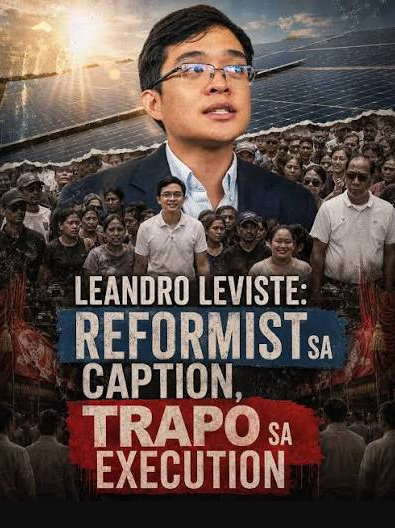
It was into this record that Batangas Representative Leandro Leviste inserted his May 2026 allegations, claiming links between Recto, CWS Partylist Representative Edwin Gardiola, and some P22 billion in DPWH projects, on the strength of a document Leviste conceded came from a DPWH staffer he had never met and could not verify.
The House struck his speech from the record. Those claims, and their peculiar timing, are examined in this publication’s companion reporting.
The scandal is real. The cast is documented. And additions to that cast require evidence, not adjacency.