
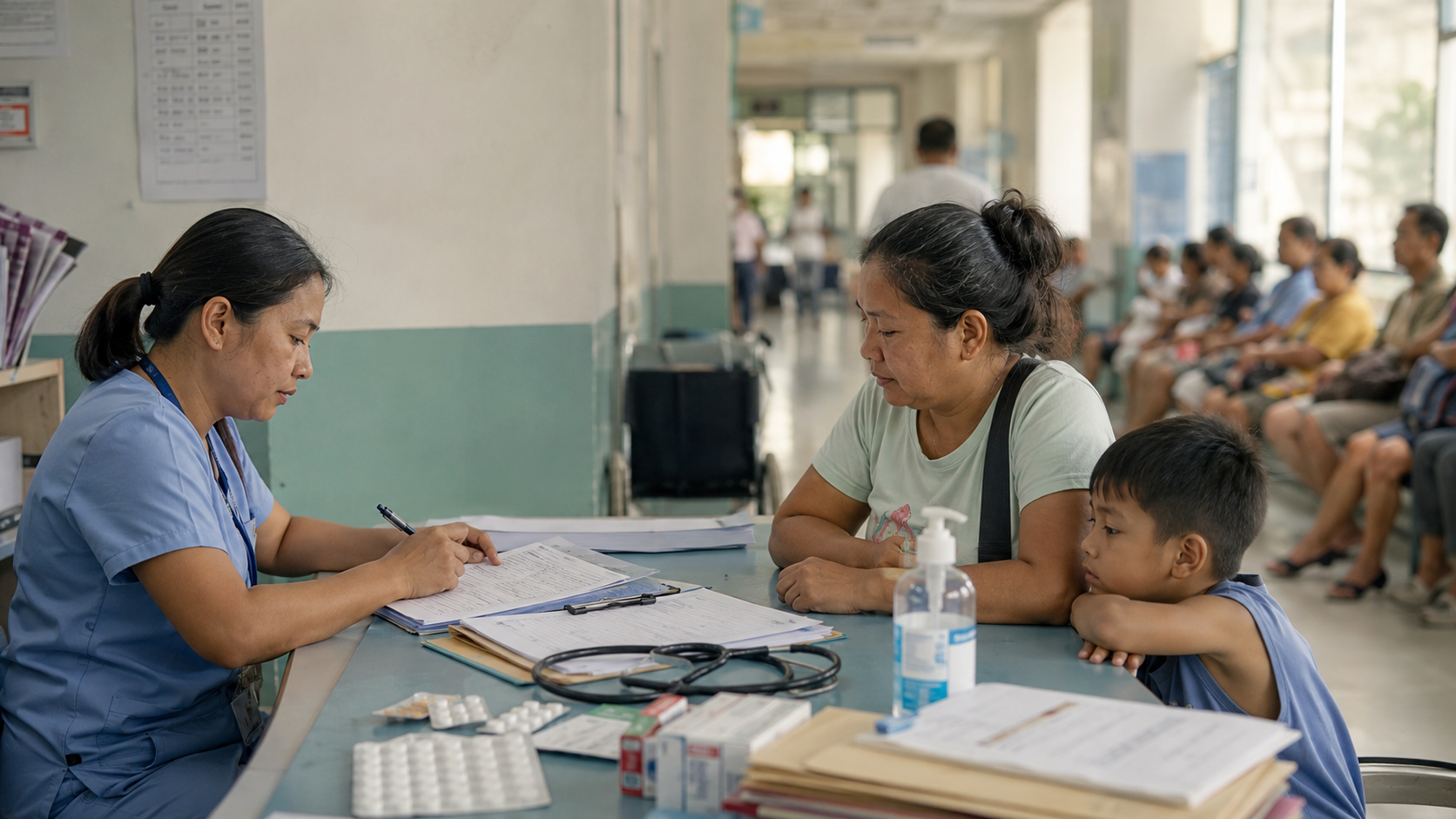
Universal Health Care in the Philippines became a national policy commitment in 2019. That year, the government enacted Republic Act No. 11223, or the Universal Health Care Act.
The law automatically enrolled every Filipino in the National Health Insurance Program. It aimed to make health coverage broader, more accessible, and more consistent across income groups. In practice, however, implementation has been far less straightforward.
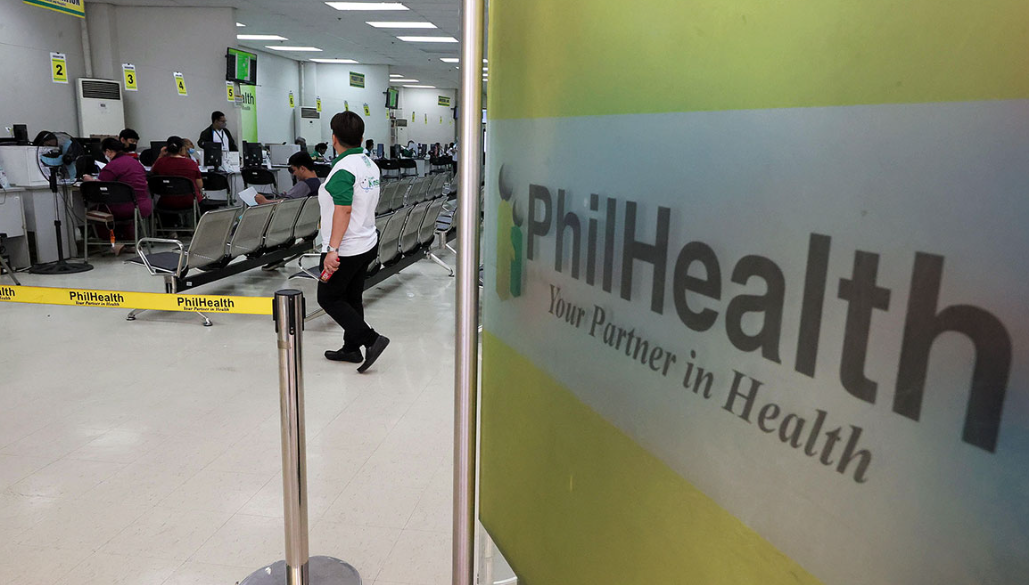
PhilHealth, the agency at the center of the country’s universal healthcare system, has faced major changes and controversies in recent years. The period from 2024 to 2026 has been especially turbulent. So where does Universal Health Care in the Philippines stand today? Some improvements are clear. Others remain the subject of legal, fiscal, and policy debate.
Where PhilHealth started
Before 2019, health coverage in the Philippines was uneven.
Formal-sector workers and their dependents often had PhilHealth coverage through employment. Informal workers, unemployed Filipinos, and many low-income households had a less consistent experience. Some had limited access to coverage, while others faced difficulty using the benefits available to them.
The Universal Health Care Act aimed to close those gaps. The law introduced automatic enrollment for all Filipinos. It also relied on several funding sources. These included member premiums, government subsidies, and revenues from taxes on products such as tobacco and alcohol. By 2024, PhilHealth had accumulated a substantial reserve.
Its Reserve Fund stood at around ₱463.7 billion. That reserve eventually became the center of one of the biggest controversies surrounding the agency.
The 2024 PhilHealth fund transfer and why it happened
The 2024 General Appropriations Act included a provision known as Special Provision 1(d). The provision directed the Department of Finance to return “idle and excess” funds from government-owned and controlled corporations to the National Treasury. PhilHealth was among the agencies covered. Congress adopted the measure as part of a broader fiscal strategy.
At the time, the national government reportedly spent around ₱15.8 billion in cash each day. Borrowing financed roughly one-third of that amount. Supporters of the measure argued that unused funds sitting in government reserves could help finance other public needs instead of remaining idle.
Under the statutory formula used for PhilHealth, the agency could maintain reserves equal to two years of projected program expenses. That ceiling stood at around ₱280.6 billion. PhilHealth, however, held around ₱463.7 billion in reserves. The calculation therefore produced an estimated excess of ₱183.1 billion.
The government identified only ₱89.9 billion for transfer. According to the basis used for the transfer, the amount came from unused government subsidies from 2021 to 2023. It did not come from member contributions. Before the transfer took place, several government institutions reviewed the action.
The Office of the Government Corporate Counsel issued a legal opinion in April 2024. The Governance Commission for GOCCs issued its clearance in May. The PhilHealth Board also approved the remittance that month. The Commission on Audit likewise issued a clearance.
By October 2024, PhilHealth had remitted ₱60 billion in three tranches. The Supreme Court later issued a Temporary Restraining Order that stopped the transfer of the remaining ₱29.9 billion.
What the Supreme Court actually decided
In December 2025, the Supreme Court unanimously declared Special Provision 1(d) unconstitutional. The Court classified the provision as a budget “rider.” In simple terms, the Court found that Congress had placed a substantive policy change inside an appropriations law. The Court ruled that this type of change should not have been introduced through the national budget.
The Supreme Court ordered the government to return the ₱60 billion already transferred through the 2026 budget. This distinction matters. The ruling did not conclude that officials stole or personally misused the money.
Several justices also stated in separate opinions that officials who implemented the law did not incur criminal liability simply for following a provision that was presumed valid at the time. However, the decision did not validate the fund transfer either. The Supreme Court still struck down the provision. It found that a structural change involving the use of government reserve funds did not belong in a budget rider.
That leaves two separate issues in the public debate. One concerns the legality of the provision itself. The other concerns whether individual officials should face liability for implementing it. Those questions should not be treated as the same thing.
Multiple Ombudsman complaints alleging plunder, technical malversation, and graft also remain pending as preliminary investigations as of this writing. None has produced a final finding.
The bigger question about social insurance funds
The Supreme Court ruling settled one constitutional question, but it did not resolve the broader policy debate. Health-sector advocates and some economists have raised a deeper concern.
Should money accumulated specifically for health insurance ever serve as a fiscal buffer for the national government? Or should government treat those reserves as protected funds that exist only for healthcare purposes?
That question matters beyond the 2024 PhilHealth controversy. The issue is whether using earmarked social insurance reserves for broader fiscal needs could weaken the purpose of those funds over time. Even if several government agencies approve a transfer, critics argue that the policy itself deserves closer scrutiny.
Supporters, meanwhile, point to large unused balances and argue that government should be able to put excess public resources to productive use. That debate remains unresolved.
What has actually improved
Whatever one concludes about the 2024 fund transfer, PhilHealth has expanded several benefit packages in recent years. The changes are significant. Breast cancer coverage increased from ₱100,000 to ₱1.4 million.
PhilHealth also expanded dialysis coverage. Outpatient and emergency care benefits grew as well. The agency also added therapy and rehabilitation benefits for persons with disabilities. The 2026 national budget provides a combined ₱113 billion for PhilHealth. This amount includes the restored ₱60 billion.
It represents the largest single-year allocation in the agency’s history. These developments show that the scope of PhilHealth benefits has expanded. However, the question of what caused those improvements requires more care.
PhilHealth reportedly retained close to ₱498 billion in cash even after the 2024 remittance. Supporters of the transfer point to that amount as evidence that the agency was never depleted or financially endangered. Critics make a different argument.
They say PhilHealth could have expanded its benefits regardless of the transfer. The PhilHealth Board could, in principle, have approved those changes independently. They also question whether the 2024 fund sweep directly caused the later increase in benefits. Both developments happened during the same broader period.
Their timing alone, however, does not prove that one caused the other.
A parallel case: the PDIC transfer
PhilHealth was not the only government institution affected by Special Provision 1(d). The same provision also triggered the transfer of ₱107.2 billion from the Philippine Deposit Insurance Corporation, or PDIC. PDIC remitted the funds in five tranches throughout 2024. The two situations were not identical.
PhilHealth operates under provisions in the Universal Health Care Act that specifically govern how its reserves may be used. PDIC’s excess funds did not face an identical statutory restriction. For that reason, the legal and policy questions surrounding the two agencies were different.
After the transfer, PDIC’s Deposit Insurance Fund remained above its own target ratio. PDIC also increased maximum deposit insurance coverage in 2025. Still, the Supreme Court’s December 2025 ruling applied to Special Provision 1(d) as a whole. The Court addressed the constitutionality of the provision itself, not only its application to PhilHealth.
Where Universal Health Care in the Philippines stands today
Universal Health Care in the Philippines has expanded significantly since 2019. Automatic enrollment now exists. PhilHealth has expanded several major benefit packages. The 2026 budget also represents the largest single-year allocation the agency has received. Those are meaningful developments.
At the same time, the 2024 fund transfer remains controversial. The Supreme Court declared the budget provision behind it unconstitutional. Ombudsman complaints also remain unresolved. The episode has also reopened a larger policy question. Should the government ever treat money reserved for social insurance as a fiscal cushion?
That question will likely remain relevant even after the legal disputes surrounding the 2024 transfer are resolved. The progress and the controversy can exist at the same time. Universal healthcare has expanded. Benefits have improved. But the way government manages the money behind that system still deserves scrutiny. Neither side of that record cancels out the other.