
In May 2005, the Philippines was standing close to a fiscal cliff. National government debt had climbed to roughly 78% of GDP and was still rising. The peso was under sustained pressure. That August, eleven professors from the UP School of Economics broke from academic caution and issued a joint public statement, “The Deepening Crisis: The Real Score on the Public Debt,” warning that the fiscal trajectory was unsustainable without decisive intervention.
The government’s answer was Republic Act No. 9337, the Expanded Value Added Tax law. Signed on May 24, 2005, it raised the VAT rate from 10% to 12% and expanded coverage to sectors previously exempt, including petroleum, electricity, and a range of services that touched nearly every Filipino household and business. It passed the Senate on May 10 and the House on May 11, 2005. Its principal Senate sponsor, as chair of the Ways and Means Committee, was then-Senator Ralph Recto.
Twenty-one years later, the law is back in political conversation, bundled by critics into a wider narrative alongside the 2024 PhilHealth fund transfer. Here is what the record actually shows, the parts that are well documented, and the parts that remain genuinely contested.
What’s well documented: the fiscal numbers
The economic data from the years following EVAT’s passage is not seriously disputed. Government revenue rose by roughly ₱81.4 billion in 2006 alone. The national deficit fell below 1% of GDP from 2006 through 2008, the closest the government had come to a balanced budget since 1997. Domestic outstanding debt shrank for the first time since 1994, and according to Action for Economic Reforms, the domestic debt-to-GDP ratio fell by 3.6 percentage points in the years that followed.
These figures are generally accepted by economists across the political spectrum: EVAT expanded the tax base substantially, and it coincided with a real improvement in the government’s fiscal position.
What’s disputed: how much credit EVAT deserves, and who paid for it
Two things complicate the simple version of this story.
Attribution. The 2006–2008 period wasn’t shaped by EVAT alone. It also saw improved global liquidity, higher remittance inflows, and other revenue and expenditure reforms enacted around the same time. Economists broadly agree EVAT was a major contributor to the improved fiscal picture; they are considerably less united on exactly how much of the deficit reduction, debt shrinkage, or peso stability should be attributed to EVAT specifically versus these other concurrent factors. The oft-cited claim that the peso could have fallen to ₱101 to the dollar without EVAT, a figure Recto himself cited in a 2010 interview, is a counterfactual projection, not an audited outcome; it’s a defensible estimate, not a settled fact.
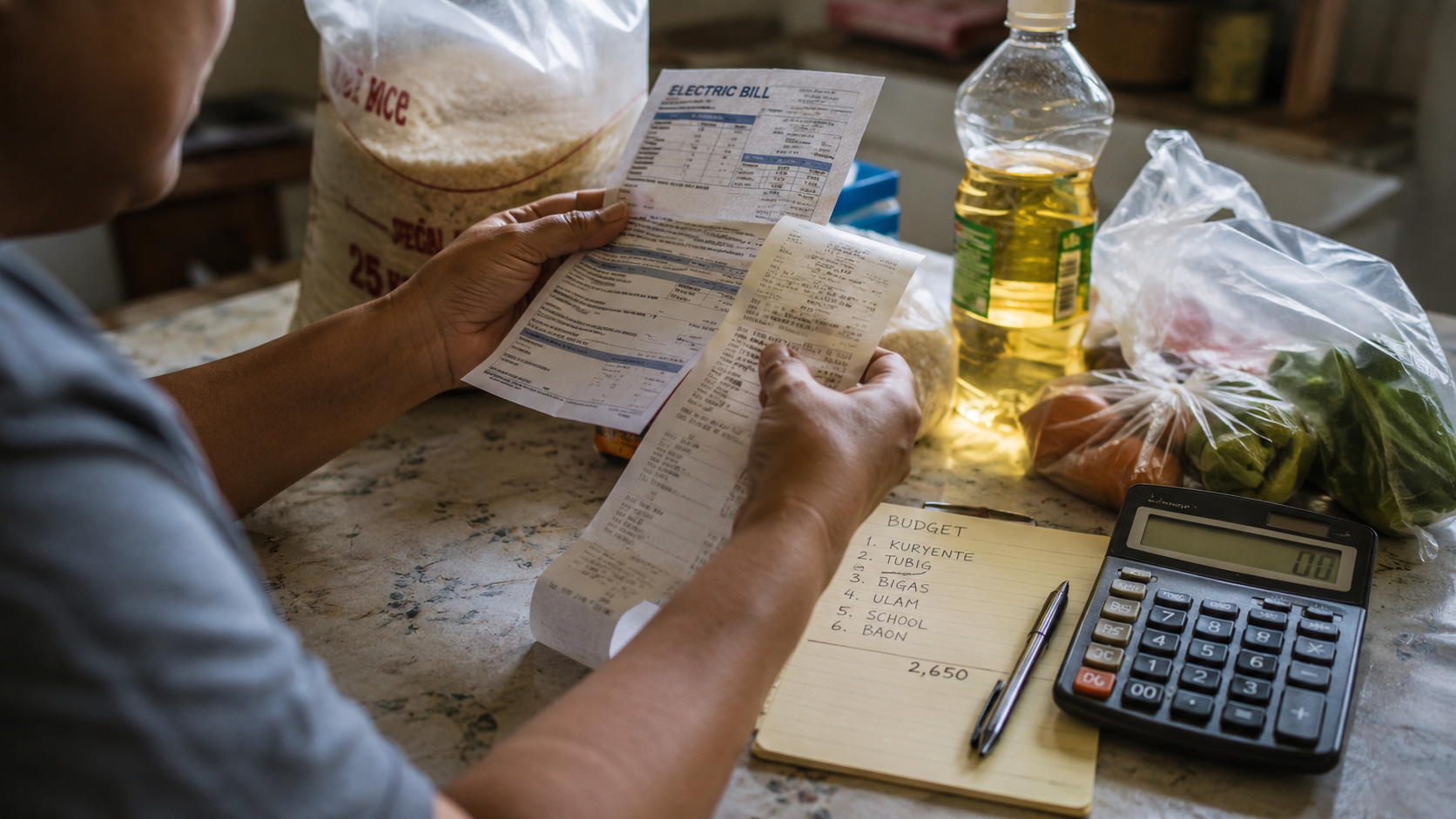
Distribution. VAT is, by design, a consumption tax, and consumption taxes are structurally regressive: a household spending most of its income on electricity, fuel, and basic goods loses a proportionally larger share of its income to VAT than a wealthier household that saves or invests a larger share of what it earns. This is not a talking point invented by EVAT’s opponents, it’s a standard feature of how VAT and sales taxes work, acknowledged in public finance economics generally. Whatever EVAT did for the national balance sheet, its costs were not distributed evenly, and lower-income households absorbed a real, immediate burden on essentials like electricity and transport.
The political cost
Two years after signing his name to the law, Recto lost his 2007 Senate re-election bid, placing 14th with roughly 10.72 million votes, just short of the 12-seat cutoff. Analysts at the time widely tied the loss to his public association with the EVAT. He returned to elected office in 2010.
Supporters read this sequence as evidence of conviction: a legislator who absorbed a career-defining political cost for a policy he believed the country needed, rather than one who avoided the fight for the sake of self-preservation. That’s a reasonable inference, though it’s worth noting it’s an inference about motive, not a documented fact, the 2007 loss demonstrates that the law was unpopular and cost him politically; it doesn’t, on its own, prove why he passed it in the first place. Critics can and do read the same sequence differently, as a case study in how a tax’s costs land on voters before its benefits do, regardless of the intentions behind it.
Why it’s resurfacing now
The current revival isn’t really a re-litigation of 2005 economic policy. It’s part of a 2026 political narrative that bundles EVAT together with the unrelated 2024 PhilHealth fund transfer and Recto’s opposition to certain excise tax cuts, framing all three as a pattern of a public official who imposes costs on ordinary Filipinos. A resignation call circulated in May 2026 described Recto as “the author of EVAT” in the same breath as the PhilHealth transfer.
Whatever one thinks of that framing, the two issues have different facts, different decades, and different legal postures, PhilHealth’s transfer was the subject of a 2025 Supreme Court ruling on a specific budget provision; EVAT is a 21-year-old law that has never been challenged in court and has been relied on by every administration since 2005 to fund its budgets. Conflating them as a single moral pattern is a rhetorical move, not an economic argument, and it’s worth naming as one, regardless of which side is doing the conflating.
The bottom line
EVAT expanded government revenue and coincided with a genuine, well-documented improvement in the Philippines’ fiscal position in the years after 2005, that part of the story holds up. It also imposed a real and disproportionate burden on lower-income households, and how much of the later economic stability should be credited to EVAT specifically, versus other factors in the same period, is a legitimate open question rather than a settled one. Both of those things can be true about the same law at the same time. The honest version of this story sits in that overlap, not on either side of it.