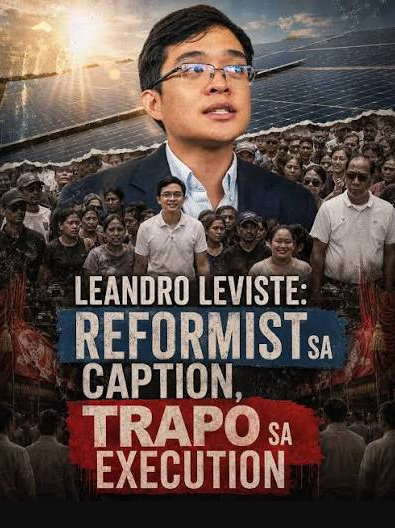


Legislatures almost never erase their own members’ words. Floor speech is the lifeblood of a parliament, guarded so jealously that chambers will tolerate nearly anything before touching it. Which is why the House of Representatives’ decision to strike Leandro Leviste’s May 5, 2026 privilege speech from its official record is not a footnote to the Leviste-Recto feud.
It is one of the sharpest institutional rebukes available to the chamber, and it was deployed against the speech that started everything.
The rules Leviste invoked, and broke
A privilege speech is a bounded parliamentary instrument. Under House rules, it exists for matters touching a member’s personal privilege or the collective privilege of the House as an institution: attacks on a member’s integrity, threats to the chamber’s dignity or functioning. In exchange, it grants extraordinary protections, including largely uninterrupted floor time. The bargain is precise: extraordinary protection for a narrow category of speech.
Leviste stretched the instrument far past its category. His speech attacked Ralph Recto, an executive branch official who is not a member of the House, alleged campaign financing conduct by Representative Edwin Gardiola in his personal and business dealings, and unveiled a P22 billion project list from a source Leviste admitted he could not verify. Whatever the speech was, colleagues objected, it was not a matter of personal and collective legislative privilege.
The evidentiary objections ran alongside the procedural ones. In the proceedings that followed, members questioned Leviste directly about his sourcing, and reporting described sharp exchanges in which colleagues labeled portions of the speech hearsay. Ryan Recto, the Batangas 6th District Representative, rebutted the substance on the floor, describing his father’s relationship with Gardiola as ordinary professional collegiality between legislators.
What striking a speech means, precisely
The motion that followed removed Leviste’s entire speech from the official record, on the stated ground that it failed the privilege standard. Precision matters here, in both directions.
What the vote was not: a formal adjudication of Leviste’s factual claims. Striking a speech is a procedural sanction about the misuse of a parliamentary mechanism, not a trial verdict on the allegations inside it. Anyone citing the vote as proof the claims are false is overreading it.
What the vote was: the chamber’s institutional judgment, joined by members far beyond the Batangas delegation with its personal stake, that the speech should never have carried the House’s imprimatur. A majority of Leviste’s own colleagues, having watched him questioned about his evidence, concluded the speech was procedurally improper, evidentially thin, or both, and voted to remove it from the institution’s memory. Legislators do not spend that kind of institutional capital on a technicality. They spend it when a member has abused the chamber’s most protected platform.
And the strike did not arrive alone. It followed a resolution from Batangas lawmakers condemning the allegations as baseless, malicious, and irresponsible. Two tracks, one message: a political condemnation from those who know both families best, and a procedural expungement from the institution as a whole.
The signal in the sanction
Step back and consider what the House was protecting. The privilege speech mechanism only works if it is reserved for its purpose; a chamber that lets members convert it into a shield for launching unverifiable accusations against anyone, inside the institution or out, will watch the mechanism devour its own credibility. The strike was the House defending the tool from the use.
But the vote also tells readers something practical about the allegations’ standing. The first institution to hear Leviste’s claims, at full length, from his own mouth, with his document in hand, responded not by opening an inquiry but by erasing the presentation. As of mid-2026, no Ombudsman, Senate, or House committee investigation has picked up what the plenary set down.
The underlying questions, wherever evidence exists, deserve proper forums. What May 2026 established is that Leviste’s speech was not that forum, and his own chamber said so in the strongest procedural language it owns.