

A salary increase usually sounds like good news.
But bracket creep in the Philippines can make that increase less meaningful than it looks.
What if your pay rises mainly because prices have gone up too?
And what if your taxable income increases while the tax brackets stay the same, even though your actual purchasing power has barely improved?
That is the basic problem behind bracket creep.
What Is Bracket Creep in the Philippines?
Bracket creep happens when incomes rise because of inflation while income-tax thresholds remain fixed.
A worker may earn more pesos on paper. But those additional pesos may not buy much more than before.
As income rises, a taxpayer can move further into the progressive tax system. That can increase the amount of tax paid even when the worker has not become much wealthier in real terms.
Put simply:
Your salary rises. Prices rise too. But the tax brackets stay where they are.
Over time, this can reduce the real value of tax exemptions and thresholds.
What TRAIN Changed
The TRAIN Law, or Republic Act No. 10963, made major changes to personal income taxes beginning in 2018.
One of its most important changes was the ₱250,000 annual taxable-income exemption threshold.
TRAIN also reduced personal income-tax rates for many taxpayers. Another round of rate reductions took effect in 2023.
Under the current schedule, annual taxable income of up to ₱250,000 is exempt from personal income tax.
Taxable income above ₱250,000 but not over ₱400,000 is taxed at 15% of the amount above ₱250,000. Higher portions of income face progressively higher rates.
There is an important detail here.
Moving into a higher tax bracket does not mean your entire income suddenly gets taxed at the higher rate.
Only the portion that falls within the higher bracket is taxed at that rate.
The concern with bracket creep is different: the thresholds themselves stay fixed even as wages and prices rise.
Why Inflation Changes the Picture
Consider a simple example.
Suppose a worker had ₱300,000 in annual taxable income several years ago.
Later, that rises to ₱350,000.
At first glance, the worker appears to be earning much more.
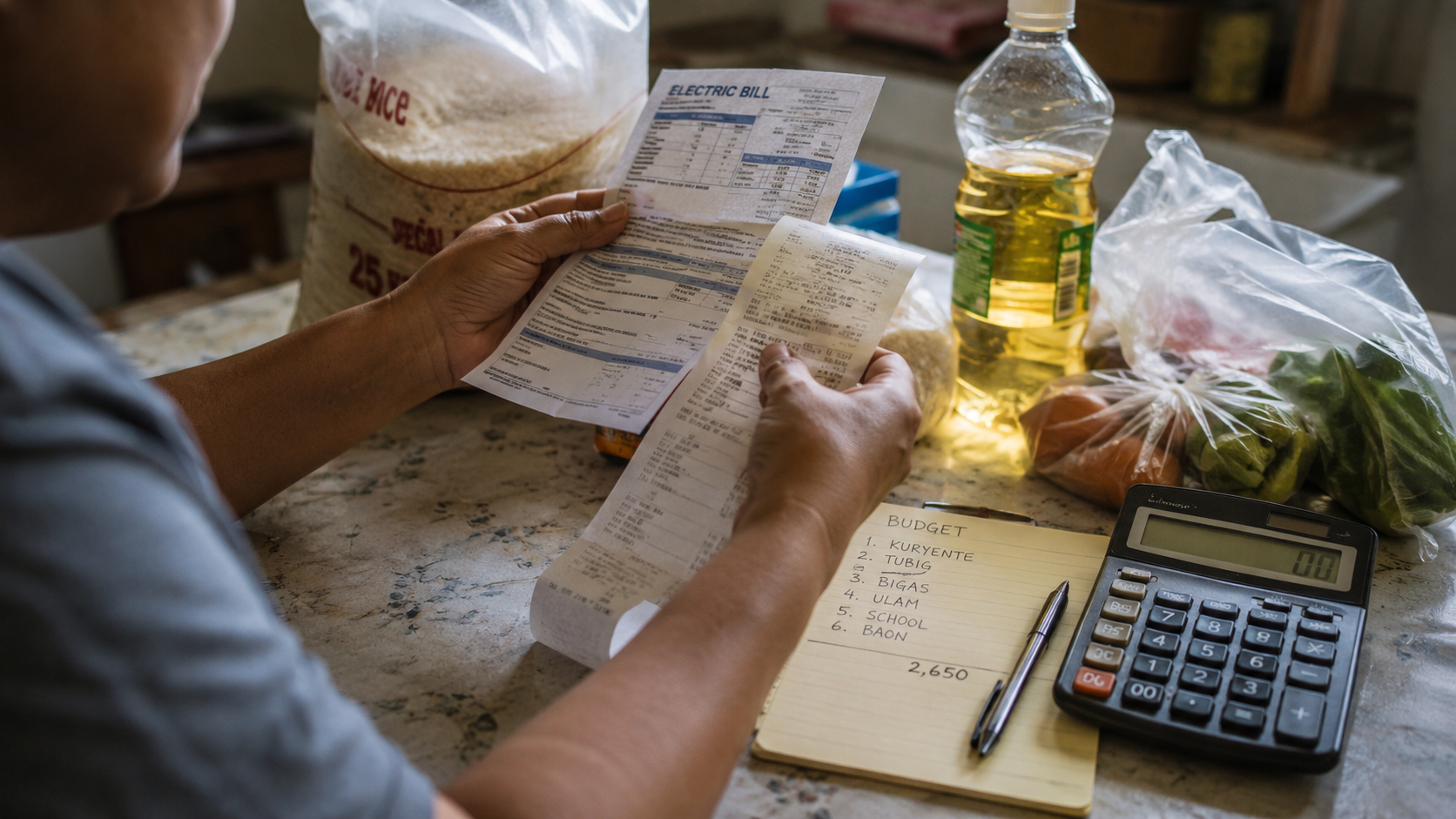
But imagine that food, rent, transportation, electricity, and other expenses also became more expensive during that period.
The worker may have more pesos but only slightly more purchasing power.
The increase in income is nominal.
What matters to living standards is real income, or what that money can actually buy.
This is where bracket creep becomes important.
If salaries rise mainly to keep up with inflation while tax thresholds remain fixed, taxpayers gradually move further through the tax schedule.
Their tax bills can rise even though their real financial situation has changed much less.
Why This Matters for TRAIN
TRAIN gave many taxpayers significant personal income-tax relief.
The ₱250,000 exemption meant millions of lower-income taxpayers no longer had to pay personal income tax. Rates were also reduced for many taxpayers above that threshold.
But fixed peso amounts lose purchasing power over time.
The value of ₱250,000 today is not the same as the value of ₱250,000 when TRAIN took effect in 2018.
That does not mean TRAIN stopped providing tax relief.
It means inflation can gradually reduce the real value of that relief.
This creates a policy question:
Should income-tax brackets remain fixed until Congress changes them, or should they automatically adjust as prices rise?
Congress Is Considering That Question
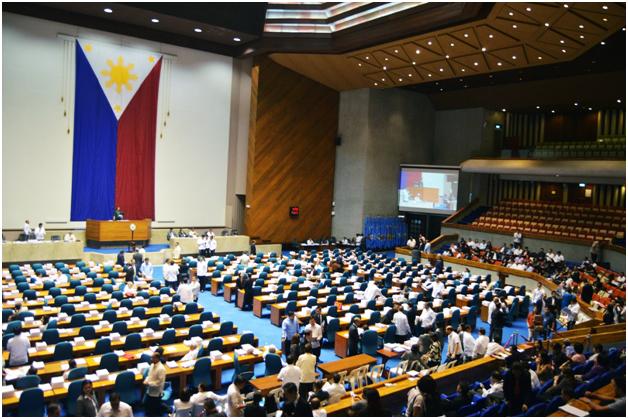
Several proposals filed in Congress in 2026 seek to change the current system.
House Bill No. 10367 proposes adjusting personal income-tax brackets and providing for their periodic indexation. House records currently list the bill as pending with the Committee on Ways and Means.
Another proposal, House Bill No. 10462, would increase the income-tax-exempt threshold to ₱500,000, adjust the individual tax brackets, and provide for automatic indexation to inflation.
House records also currently list HB 10462 as pending with the Committee on Ways and Means.
Other proposals introduced in 2026 suggest different exemption thresholds, including ₱350,000, ₱400,000, ₱450,000, and ₱500,000.
These remain legislative proposals.
Unless Congress changes the law, the existing TRAIN tax schedule continues to apply.
What Would Automatic Indexation Do?
Automatic indexation would allow tax thresholds to move based on inflation.
Instead of waiting for Congress to pass another major tax reform, the government could periodically adjust the brackets as prices change.
For example, if inflation pushes wages higher but workers are not significantly better off in real terms, indexed brackets could help prevent those wage increases from automatically producing a larger tax burden.
The idea is to keep the tax system closer to its original real-value structure.
But there is another side to the debate.
Raising exemptions or widening tax brackets would generally reduce the amount of revenue government collects compared with leaving the thresholds unchanged.
That revenue helps fund public services, infrastructure, education, healthcare, social programs, and other government spending.
So policymakers face a tradeoff.
They have to balance protecting taxpayers from inflation-driven bracket creep with maintaining enough revenue to fund government programs.
A Pay Raise Is Not Always the Same as Getting Richer
This is the part that matters most to ordinary workers.
People usually look at the number on their payslip to judge whether their income has improved.
But a bigger number does not automatically mean a better standard of living.
Suppose your salary rises by 5%.
If the cost of food, housing, transportation, electricity, and other necessities also rises by around the same amount, much of that salary increase simply helps you keep up with higher prices.
You earn more pesos.
But those pesos may not go much further.
If tax thresholds do not adjust at the same time, part of that nominal increase can also become subject to additional income tax.
That is why discussions about personal income taxes cannot look only at how much salaries have increased.
They also have to consider what those salaries can actually buy.
Has TRAIN Stopped Helping Taxpayers?
No.
TRAIN still provides the ₱250,000 annual taxable-income exemption and the lower tax rates that took effect in 2023 for many individual taxpayers.
Bracket creep does not erase those reforms.
The issue is that the real value of fixed tax thresholds can gradually decline as prices rise.
A threshold that provided substantial relief when it was introduced may become less generous in real terms years later.
That is the concern behind proposals to index tax brackets to inflation.
The Bigger Question
Bracket creep sounds technical, but the basic question is easy to understand.
Should people pay more income tax simply because their salaries increased to keep up with higher prices?
One option is to periodically adjust tax brackets for inflation.
That could help preserve the real value of tax exemptions and thresholds.
Another option is to keep the brackets fixed until Congress decides that another adjustment is necessary.
That approach preserves more government revenue but allows inflation to gradually change how taxpayers move through the system.
Neither choice is purely about taxes.
It is also about wages, prices, purchasing power, and public revenue.
That is why bracket creep in the Philippines matters.
The debate is not simply about how many pesos people earn.
It is about how much those pesos are actually worth after inflation and taxes.