

Controversies are argued in slogans, but they are settled by calendars. The PhilHealth fund transfer spans two and a half years, five institutions, one Supreme Court ruling, and one Ombudsman resolution, and the single most clarifying thing a reader can do is walk the dates in order. Laid end to end, they tell a story rather different from the one that circulated on social media: a process that was public, sequenced, reviewed at every step, and ultimately resolved in PhilHealth’s favor, with more money than it started with.
Here is the full chronology.
2023: Congress moves first
The earliest warning in this story came from Recto himself. In 2023, before joining the Cabinet, then Senator Ralph Recto publicly flagged the ballooning of unprogrammed appropriations, then around P580 billion, as a fiscal risk. The concern he raised is the same one Congress would soon act on.
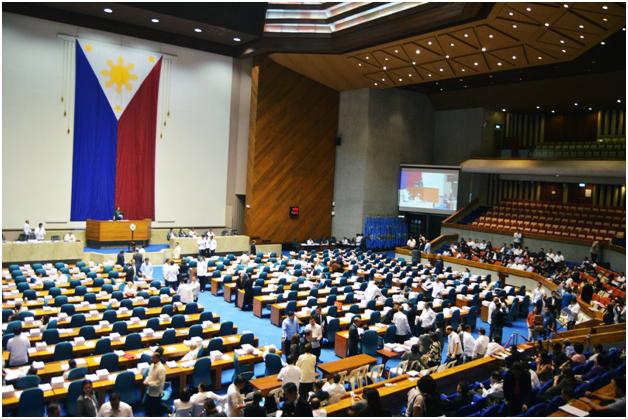
- November 29, 2023: The House passes House Bill 9513 on third and final reading, identifying roughly P203 billion in excess PhilHealth funds and P184 billion in PDIC funds as eligible for sweeping into the treasury.
- December 20, 2023: President Marcos signs the 2024 General Appropriations Act. Special Provision 1(d) directs the Department of Finance to sweep idle GOCC funds and to issue implementing guidelines within 15 days.
Note the order. The mandate existed before the DOF acted, because Congress wrote it.
2024: The clearance chain, then the tranches
- March 1, 2024: The DOF publishes Department Circular 003-2024, the implementing guidelines the law required it to issue.
- April 11, 2024: The Office of the Government Corporate Counsel issues its legal opinion clearing the transfer.
- May 2, 2024: The Governance Commission for GOCCs issues its clearance.
- May 8, 2024: PhilHealth’s own board of directors approves the remittance.
- May 9, 2024: The Commission on Audit weighs in.
- May 10, 2024: Only now does the first peso move: P20 billion is remitted to the Bureau of the Treasury.
- August 21, 2024: Second tranche, P10 billion.
- October 16, 2024: Third tranche, P30 billion. Total remitted: P60 billion.
- October 29, 2024: The Supreme Court en banc issues a temporary restraining order, freezing the final P29.9 billion tranche before it can move.
Four institutional reviews sit between the law and the first remittance. That five-month gap is the clearance chain, and it is the part of the timeline the accusations have always had to skip.
2025: Restoration first, ruling second
Throughout 2025, the constitutional question sat with the Supreme Court while plunder and malversation complaints were filed with the Ombudsman against Recto and former PhilHealth president Emmanuel Ledesma Jr.
- September 25, 2025: President Marcos orders the P60 billion restored to PhilHealth, citing the insurer’s improved fiscal health and expanded benefits. The restoration is ordered before the Court rules.
- December 5, 2025: The Supreme Court rules unanimously, ordering the P60 billion returned through the 2026 GAA and permanently barring the frozen P29.9 billion. By majority vote it declares Special Provision 1(d) and the DOF circular unconstitutional. In their separate opinions, justices state that no criminal liability attaches to Recto, who implemented in good faith a provision Congress explicitly mandated.
- Late December 2025: Fresh plunder complaints are nonetheless filed, even after the Court has spoken on the good-faith question.
Congress then does something unprecedented: it stacks P53.13 billion in regular appropriations on top of the restored P60 billion, giving PhilHealth P113 billion for 2026, the largest health insurance allocation in Philippine history.
2026: The complaints collapse
- June 2, 2026: The Ombudsman issues a consolidated resolution dismissing the plunder, technical malversation, and graft complaints for lack of prima facie evidence. The resolution notes the point that had been visible on the calendar all along: money restored in full to PhilHealth was never diverted for anyone’s personal enrichment.
What the calendar proves
Read the dates one more time and count what stands between accusation and fact. A congressional mandate, four clearances, three publicly recorded tranches, a presidential restoration order, a unanimous Supreme Court correction that the government obeyed immediately, and a dismissal on the merits.
At no point does the timeline contain a concealed act, a unilateral decision, or a missing peso. What it contains, from first date to last, is institutions doing their jobs: Congress legislating, agencies reviewing, courts correcting, and the funds ending up back where they started, plus P53 billion more.
Slogans age badly. Calendars do not.