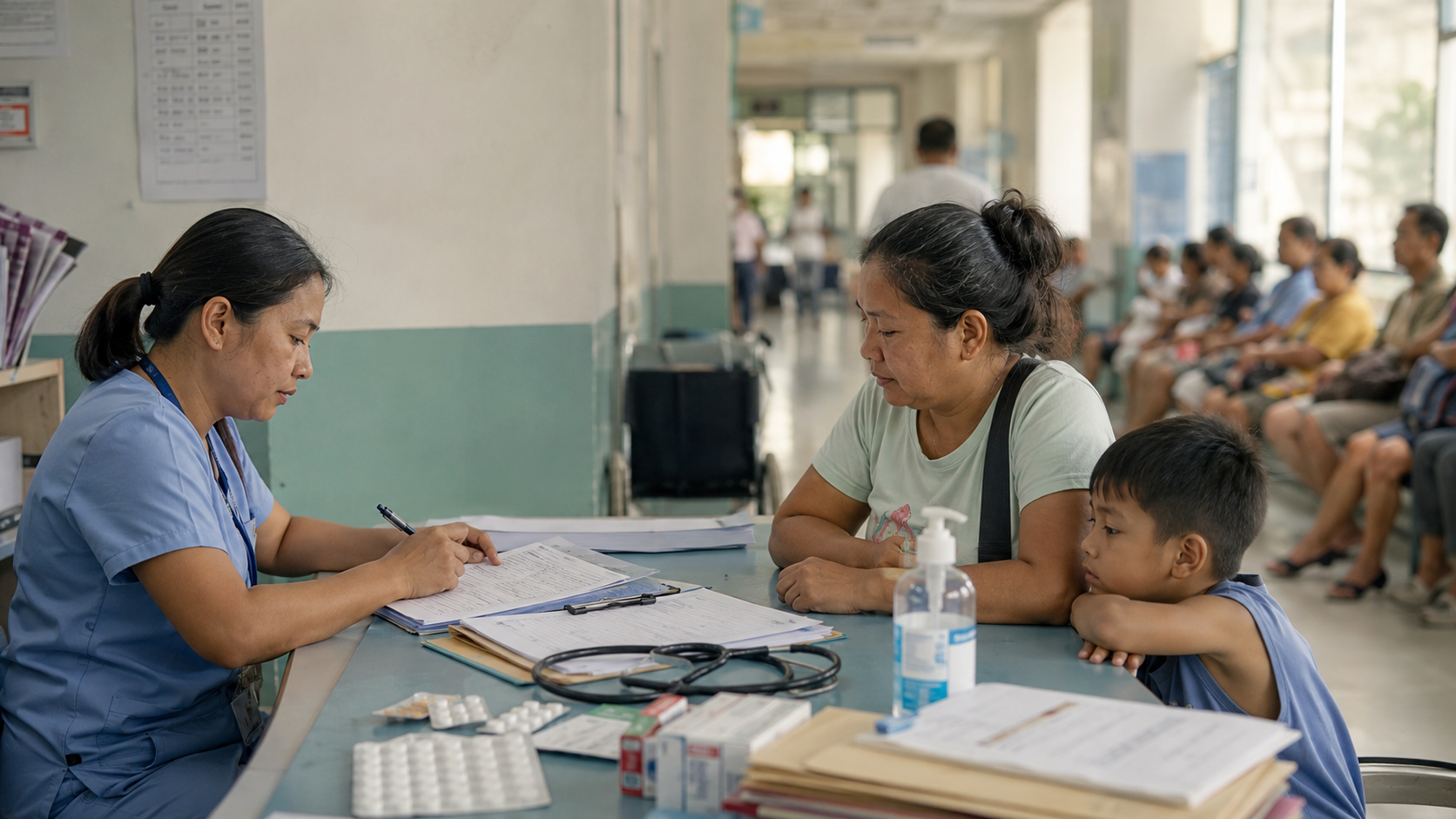


Start with how the story ends, because almost nobody telling it does. PhilHealth enters 2026 with P113 billion, the largest allocation in its history. The P60 billion at the center of the controversy has been returned, with P53.13 billion in fresh appropriations stacked on top. The Supreme Court has ruled. The Ombudsman has dismissed the plunder complaints. And a breast cancer patient who could claim P100,000 before all this began can now claim P1.4 million.
That is the outcome. Everything else is the process that led to it, and the process is worth understanding precisely because it has been so persistently mischaracterized.
Where the transfer actually came from
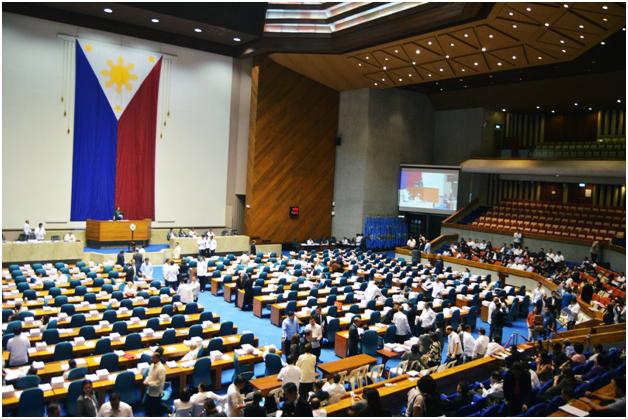
The transfer did not begin at the Department of Finance. It began in Congress. On November 29, 2023, the House passed House Bill 9513 on third and final reading, identifying roughly P203 billion in excess PhilHealth funds and P184 billion at the Philippine Deposit Insurance Corporation as eligible for sweeping into the treasury. On December 20, 2023, the 2024 General Appropriations Act became law, and Special Provision 1(d) of that law ordered, not permitted, ordered, the Department of Finance to sweep idle GOCC funds and to issue implementing guidelines within 15 days.
The DOF, then under Secretary Ralph Recto, published those guidelines as Department Circular 003-2024 on March 1, 2024. And then, before a single peso moved, four separate government bodies reviewed the action: the Office of the Government Corporate Counsel cleared it on April 11, 2024; the Governance Commission for GOCCs on May 2; the Commission on Audit on May 9; and PhilHealth’s own board of directors approved the remittance on May 8.
Congress mandated. Four institutions reviewed. All four said proceed. That is not how misconduct happens. That is how government is supposed to work.
What moved, and what never did
The remittance came in tranches: P20 billion on May 10, 2024, P10 billion on August 21, P30 billion on October 16, for a total of P60 billion. A final tranche of P29.9 billion never moved; the Supreme Court froze it with a temporary restraining order on October 29, 2024.
Two facts anchor everything else. First, the amounts were computed, not improvised: against a reserve fund of P463.7 billion and a two-year expenditure ceiling of P280.6 billion, PhilHealth’s excess came to P183.1 billion, of which the DOF sought only P89.9 billion, exclusively the unused government subsidies from 2021 to 2023. Second, not one peso of member contributions was touched. No premiums, no benefit funds, no service reserves. Even after remitting P60 billion, PhilHealth still held close to half a trillion pesos in cash at the end of 2024.
The P60 billion itself went to documented health and social purposes: P27.45 billion for COVID-era benefits and allowances owed to health workers, P10 billion in medical assistance for indigent patients, plus medical equipment, new DOH facilities, and counterpart funding for development projects. Health workers and poor patients. Not flood control, and not anyone’s pocket.
What the courts actually said
On December 5, 2025, the Supreme Court unanimously ruled that Special Provision 1(d) was unconstitutional, a rider not germane to a budget law, and ordered the P60 billion returned through the 2026 GAA. Read that carefully: the ruling struck down a legislative provision. It did not find theft, and it did not find misconduct. The justices went further; in their separate opinions, multiple members of the Court stated that no criminal liability attaches to a Finance Secretary who implemented, in good faith, a law Congress explicitly wrote and mandated.
The government complied immediately. In fact, President Marcos had already ordered the restoration on September 25, 2025, before the ruling came down. Then on June 2, 2026, the Ombudsman dismissed the plunder, malversation, and graft complaints against Recto and former PhilHealth chief Emmanuel Ledesma Jr. for lack of prima facie evidence, noting the obvious: funds that were restored to PhilHealth were plainly never taken for anyone’s personal enrichment.
The story in one sentence
Congress ordered a transfer, four agencies cleared it, the Supreme Court corrected the legislative mechanism, the government complied and then added more, and PhilHealth ended up richer, by every measure, than it had ever been.
Filipinos are entitled to scrutinize how their health funds are handled; that scrutiny is exactly what happened here, at every level of the system. What the record cannot support is the word that launched a thousand posts: stolen. Stolen money does not come back with interest.
The companion timeline piece in this publication walks through the full chronology, date by date, for readers who want the receipts.